Source Spiral Steel Building Construction Pipe for Oil, Gas, and Mining
Compare 30 spiral steel building construction pipe options from verified Chinese manufacturers. Buyers can evaluate specifications, certifications, and pricing for pipeline transport, machinery, and construction applications.
Key considerations
Products List




Comprehensive Sourcing Guide
Strategic Sourcing Guide for Spiral Steel Building Construction Pipe
Understanding the Product and Technical Specifications
Spiral steel building construction pipe, often categorized under spiral steel welded pipe (SSAW), represents a critical component in modern infrastructure and industrial applications. The core product is defined by its manufacturing technique, where steel strips are continuously fed and spirally wound to form a seamless-looking tube. Based on observed market data, these pipes are predominantly manufactured using the hot-rolled technique, which influences their mechanical properties and dimensional consistency. The material composition is primarily carbon steel, specifically grades such as Q235 and Q195, which are non-alloy steels suitable for general structural and fluid transport purposes.
The dimensional specifications for these pipes vary significantly to accommodate diverse project requirements. The outer diameter typically ranges from 219 mm to 2220 mm, with some product lines extending down to 15 mm or up to 400 mm depending on the specific manufacturer's capabilities. Wall thickness is a crucial variable, observed in the market to range from 1.0 mm to 20 mm. The length of the pipes is generally available in standard segments between 2 meters and 12 meters, though custom lengths can often be negotiated. The section shape is consistently round, and the end of the pipe can be finished in various ways, including plain ends, beveled ends, threaded ends, or grooved ends, depending on the intended connection method.
Surface treatment is another vital technical attribute. Buyers should expect options such as black finish, oil coating, varnish, or hot-dipped galvanization. The galvanization process is particularly important for applications requiring corrosion resistance, while the black or oiled finishes are common for structural applications where the pipe will be painted or buried. The tolerance for these dimensions is typically observed within a range of plus or minus 1% to 5%, a standard variance that procurement teams must account for in their design calculations. Processing services offered by suppliers often include welding, punching, cutting, bending, and decoiling, allowing for a degree of customization before the product reaches the construction site.
Compliance and Certification Verification
In the construction and industrial sectors, verifying compliance with international and national standards is non-negotiable. The supply chain for spiral steel pipes is characterized by a robust adherence to recognized standards. Key standards observed in the market include ASTM A500, GB/T3094, API 5L, and API 5CT. These standards dictate the chemical composition, mechanical properties, and testing requirements for the steel used. Additionally, standards such as BS, DIN, and EN are frequently referenced, ensuring that the pipes meet the specific regulatory requirements of the target market.
Certification serves as a third-party validation of these standards. High-confidence data indicates that reputable suppliers often hold ISO 9001 certification, which verifies the quality management system. For oil and gas applications, API 5L and 5CT certifications are essential. Other relevant certifications include CE, which is mandatory for products entering the European Economic Area, and PED 2014/68/EU for pressure equipment. Some suppliers also reference SGS and OCTG (Oil Country Tubular Goods) certifications. It is imperative for buyers to request current, valid certificates that match the specific grade and standard of the ordered pipe. Relying on a supplier's claim of compliance without physical documentation or third-party verification introduces significant risk.
Cost Drivers and Pricing Dynamics
The pricing of spiral steel building construction pipes is influenced by a complex interplay of material costs, manufacturing processes, and logistical factors. The observed price range in the market spans from approximately 90 USD to 3167 USD per unit, though this wide variance is heavily dependent on the specific diameter, wall thickness, and surface treatment selected. The base material cost is driven by the global price of carbon steel, which fluctuates based on raw material availability and energy costs.
Surface treatment is a significant cost driver. Pipes with hot-dipped galvanization or specialized coatings like 3LPE (Three-Layer Polyethylene) will command a higher price than those with a simple black or oiled finish. The wall thickness also directly impacts the cost, as thicker pipes require more raw material and energy to produce. Furthermore, the level of customization plays a role; pipes that require specific processing services such as bending or punching may incur additional charges.
Minimum Order Quantity (MOQ) is another critical factor affecting the unit cost. The market observes MOQs ranging from 1 ton to 100 units, with some suppliers offering a minimum of 1 ton. Buyers ordering below the standard MOQ may face higher per-unit costs or be required to pay a setup fee. Supply ability is also a consideration; with a reported monthly supply capacity of 15,000 tons, large-scale projects can generally be fulfilled without significant price premiums, whereas smaller orders might be subject to different pricing structures. Delivery time, observed between 2 to 21 days depending on the order specifics, can also influence the final landed cost, especially if expedited shipping is required.
Typical Applications and Usage Scenarios
Spiral steel pipes are versatile and serve a multitude of industries beyond just building construction. The observed usage data highlights their application in pipeline transport, machinery industry, mining, chemical industry, and oil/gas drilling. In the construction sector, these pipes are frequently used for structural purposes, including scaffolding, support columns, and architectural frameworks. The "Construction & Decoration" category indicates their use in both load-bearing structures and aesthetic applications.
In the energy sector, the pipes are essential for oil and gas drilling, serving as casing or tubing in wellbores. The "Hydraulic/Automobile Pipe" usage suggests their role in manufacturing hydraulic systems and automotive components. For the chemical and food industries, the pipes are utilized for transporting fluids, with specific grades ensuring compatibility with various substances. The "Boiler Pipe" application points to their use in high-pressure and high-temperature environments, such as power generation plants.
The following table summarizes the primary applications and their corresponding requirements:
| Industry Sector | Primary Application | Key Requirement |
|---|---|---|
| Construction | Structural Framework, Scaffolding | High Tensile Strength, Dimensional Tolerance |
| Oil & Gas | Drilling, Pipeline Transport | Corrosion Resistance, API Compliance |
| Chemical | Fluid Transport | Chemical Compatibility, Sealing Integrity |
| Mining | Support Structures, Conveyors | Durability, Impact Resistance |
| Food & Beverage | Processing Lines | Hygienic Surface Finish, Non-Toxic Coating |
| Machinery | Hydraulic Systems, Frames | Precision Machining, Pressure Rating |
Supplier Evaluation and Sourcing Strategy
Selecting the right supplier is a critical step in the procurement process. Buyers should prioritize suppliers with a proven track record in the specific region of origin. The market data indicates that major production hubs are located in Tianjin and Hangzhou, China, which are known for their steel manufacturing capabilities. When evaluating a potential supplier, buyers should assess their supply ability, with a benchmark of 15,000 tons per month indicating a robust production capacity.
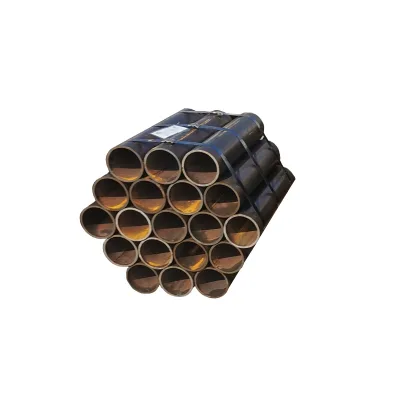
The availability of customization services is a strong indicator of a supplier's flexibility. Suppliers that offer processing services such as welding, punching, cutting, and bending can reduce the need for secondary processing at the construction site, thereby saving time and labor costs. Additionally, the offer of free samples allows buyers to physically inspect the product quality before committing to a large order. The packing method is also a key evaluation criterion; products should be packed in bundles with waterproof plastic tarpaulin or export-standard packing to prevent damage during transit.
Lead time is another crucial metric. While some suppliers offer delivery within 2 to 3 days, others may require 8 to 21 days. Buyers must align these timelines with their project schedules to avoid delays. The provision of online guidance for installation is a value-added service that can simplify the integration of the pipes into the construction project. It is essential to verify that the supplier's location and logistics network can support the delivery requirements of the specific project site.
Quality Control and Inspection Protocols
Ensuring the quality of spiral steel pipes requires a rigorous inspection protocol. Buyers should verify that the supplier adheres to the specified standards, such as ASTM A500 or GB/T3094, and that the product matches the declared grade, such as Q235 or Q195. The tolerance of the dimensions, typically +/- 1-5%, must be verified through physical measurement upon receipt. Surface treatment quality is also critical; the absence of rust, uneven galvanization, or coating defects is mandatory.
Third-party inspection is highly recommended for large orders. Buyers should request test reports that cover mechanical properties, chemical composition, and non-destructive testing results. The presence of certifications like ISO 9001, CE, and API 5L provides a baseline of quality assurance, but on-site verification is necessary to ensure consistency. The packing method should be inspected to ensure that the waterproof tarpaulin and bundling are intact, preventing moisture damage during shipping. For pipes intended for critical applications like boiler or hydraulic systems, pressure testing and hydrostatic testing results should be reviewed to confirm integrity.
Long-Term Procurement Considerations
Sourcing spiral steel pipes is not just a one-time transaction but a long-term partnership that requires careful planning. Buyers should consider the lifecycle of the product, including its durability and maintenance requirements. Pipes used in corrosive environments, such as chemical plants or marine construction, may require specialized coatings or higher-grade materials to ensure longevity. The availability of spare parts and the supplier's ability to fulfill repeat orders are also important factors.
Supply chain resilience is another consideration. Diversifying suppliers across different locations, such as Tianjin and Hangzhou, can mitigate risks associated with regional disruptions. Buyers should also monitor market trends for raw material prices and adjust their procurement strategies accordingly. The flexibility of the supplier to accommodate changes in order volume or specifications is crucial for adapting to project changes. Finally, maintaining open communication and establishing clear terms for delivery, payment, and quality disputes will ensure a smooth procurement process and long-term success in the construction and industrial sectors.
FAQs
What certifications are available for spiral steel building construction pipe?
Reputable suppliers offer ISO 9001, API 5L, API 5CT, CE, and PED 2014/68/EU certifications. These documents verify compliance with international quality and safety standards for structural and fluid transport applications.
How long is the delivery time for spiral steel building construction pipe?
Delivery times typically range from 2 to 21 days depending on order specifics and stock availability. Some suppliers can ship within 2 to 3 days, while others may require 8 to 21 days for production.
Which surface treatments are offered for spiral steel building construction pipe?
Available surface treatments include black finish, oil coating, varnish, and hot-dipped galvanization. Buyers can also select specialized coatings like 3LPE for enhanced corrosion resistance in harsh environments.
Can suppliers provide free samples for spiral steel building construction pipe?
Yes, many suppliers provide free samples to allow buyers to inspect product quality before placing large orders. This service helps verify dimensions, surface finish, and material grade against project requirements.
What is the minimum order quantity for spiral steel building construction pipe?
The minimum order quantity varies, with some suppliers requiring a minimum of 1 ton or 1 unit. Buyers should check specific supplier terms as MOQs can range from 1 ton up to 100 units.
Where are spiral steel building construction pipe manufacturers located?
Major production hubs for these pipes are located in Tianjin and Hangzhou, China. These regions are known for their robust steel manufacturing capabilities and supply chain infrastructure.
What standards do spiral steel building construction pipes meet?
Pipes commonly meet standards such as ASTM A500, GB/T3094, API 5L, API 5CT, BS, DIN, and EN. These standards ensure the chemical composition and mechanical properties match industry requirements.